Meknes and Volubilis: The Imperial City and the Forgotten Roman City
Published on 10 juillet 2026
Moulay Ismail's 17th-century capital, Meknes opens the door to Volubilis, a UNESCO-listed Roman city with exceptional mosaics.
Less well known than Marrakech or Fez, Meknes is nonetheless one of Morocco's four imperial cities — and the gateway to one of North Africa's finest archaeological sites.
Capital of the longest reign in Moroccan history
Founded in the 11th century by the Almoravids, Meknes truly became imperial under Alaouite Sultan Moulay Ismail, who made it his capital from 1672 to 1727 — the longest reign in Moroccan history. Over half a century, he had nearly 45 kilometres of ramparts built, pierced by twenty monumental gates, along with some fifty palaces fed by an ingenious hydraulic system of waterwheels and underground canals. This historic city, blending 17th-century Islamic and European influences, is today listed as a UNESCO World Heritage Site.
Volubilis, the Roman city at the gates of Meknes
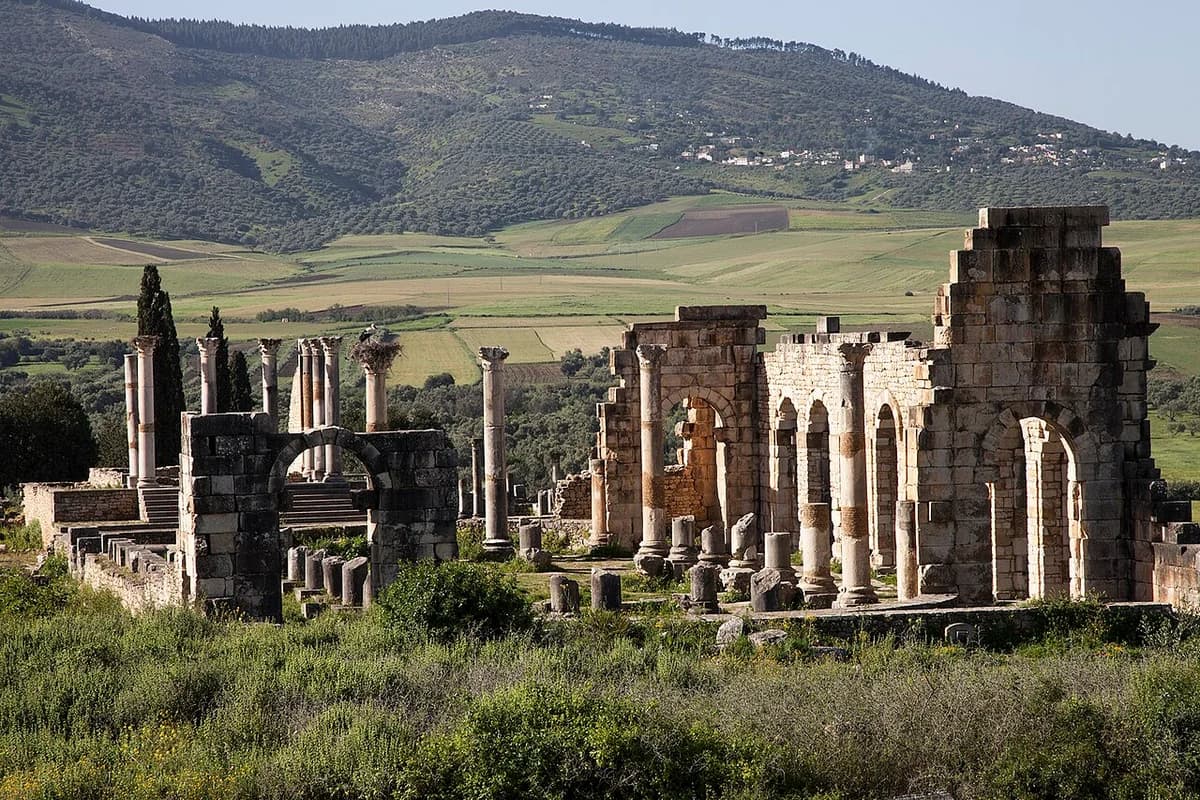
About thirty kilometres away, near Moulay Idriss Zerhoun, Volubilis extends the journey through time. Capital of the Berber kingdom of Mauretania and later the western capital of the Roman province of Mauretania Tingitana, the city yielded one of the finest mosaic collections in the Roman world. Remarkably, most of the site remains in situ rather than moved to a museum, which earned it UNESCO World Heritage status in 1997.
Continue the discovery
The Meknes destination page brings together all the sites available to book, including Volubilis, the flagship site of this expansion.
Practical information
Meknes is connected by train to Morocco's main cities, including Fez, Rabat and Casablanca. Volubilis can be visited in half a day from Meknes; spring and autumn offer the best climate for exploring the largely open-air site.